Dicalcium Phosphate: A Deep Dive into a Reliable Compound
Historical Development
Dicalcium phosphate stands as one of those compounds that kept cropping up through both necessity and curiosity. In the early 19th century, researchers wanted practical phosphate sources. High-grade phosphates for fertilizer took up much of the attention. Chemists like Justus von Liebig and others worked to break down bone ash and treat it with acids to free phosphoric elements. Through repeated refinements, dicalcium phosphate began to separate itself from other calcium phosphates, not only for its nutritional qualities but because it formed a consistent, pure product in industrial settings. Agricultural and food scientists spent much of the 20th century figuring out practical, cost-effective routes to manufacture it at scale, helping it make the jump from fertilizer base to food fortifier and pharmaceutical ingredient.
Product Overview
Dicalcium phosphate is known for its practicality. Used as a dietary calcium source, a leavening agent, and as a component in toothpaste, it brings together stability and nutritional value. The compound appears as a white, crystalline powder with barely any taste, dissolves only slightly in water, and doesn't leave residues or clump when blended with other powders. Various industries favor it for this reason. Animal feed, meanwhile, is another key user; dicalcium phosphate serves as a vital mineral supplement ensuring healthy skeletal development in livestock and poultry, especially where forage lacks enough mineral content.
Physical & Chemical Properties
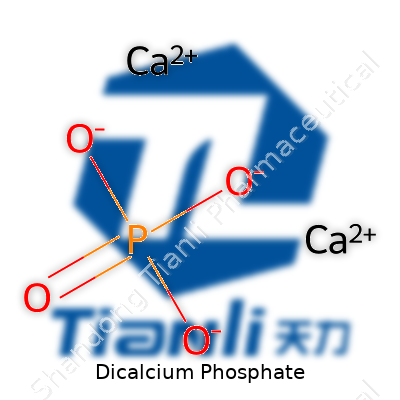
Calcium hydrogen phosphate, as chemists often call it, carries the chemical formula CaHPO4. It shows up most frequently as a dihydrate, with a molecular weight sitting around 136.06 g/mol. Structurally, those compact monoclinic crystals don’t absorb much moisture from air—a boon for storage and shelf stability. Generally odorless, the product remains only slightly soluble in water (about 0.02g/100g at 25°C), and nearly insoluble in alcohol. Stability ranks high, even under heat, but adding significant acid or alkali can break it down: acidic environments shift calcium away, liberating more soluble phosphates, while strong alkali exposure produces other calcium salts quickly. Melting points clock in above 200°C, another contributor to its use in baked goods and processing where brief exposure to high heat occurs.
Technical Specifications & Labeling
Manufacturers and regulatory bodies hold dicalcium phosphate to precise grades. Food and pharmaceutical specifications limit heavy metals, arsenic, lead, and fluorine content to near-trace amounts, sometimes down to single-digit ppm levels. The compound’s identity finds confirmation through precise calcium-to-phosphorus ratios, purity tests, and verification of pH in aqueous suspension. Labeling typically follows standards set by the U.S. Pharmacopeia (USP), the Food Chemical Codex, or national pharmacopeia in Europe and Asia. Certification for halal, kosher, and GMO-free attributes often accompanies major bulk shipments bound for multinational distribution. As demand has grown for tighter transparency in ingredients, you'll often see QR code traceability and full country-of-origin data on bulk and consumer packaging alike.
Preparation Method
The main industrial routes draw from either wet-process phosphoric acid or from treating natural phosphate rock with calcium sources. In one approach, purified food-grade phosphoric acid gets carefully neutralized using limestone or calcium hydroxide, generating a precipitate that, through filtration, washing, and drying, yields dicalcium phosphate. Another classic route runs through controlled treatment of phosphate rock with sulfuric acid, followed by separation steps to isolate calcium and phosphate in the right proportions, often using multiple wash cycles to drive away unwanted fluorides or organic matter. Once raw crystals emerge, steps like granulation or spray drying ensure particle consistency for animal feed, tablet formation, or blend-ready food powders. Facilities include robust environmental safeguards to keep phosphate dust and acidic residues out of water and air, tracking stricter thresholds as environmental awareness has grown worldwide.
Chemical Reactions & Modifications
Under mild heat and controlled humidity, dicalcium phosphate keeps its form without reacting with most common ingredients. In highly acidic media—think lemon juice or stomach conditions—the compound breaks apart, releasing bioavailable phosphate and calcium. This makes it effective for nutritional purposes. A base like sodium hydroxide or even excess lime, on the other hand, can prompt conversion to tricalcium phosphate or calcium carbonate, depending on concentrations and temperature. For specialty applications, manufacturers sometimes modify the surface area through micronization or coat the crystals to delay reaction times, handy for time-release nutritional formulas. As pharmaceutical scientists push for improved tablet stability and dissolution profiles, they look at particle engineering and co-crystallization as a frontier, looking for blends that manage both flowability during processing and stability on the shelf.
Synonyms & Product Names
Anyone combing ingredient lists or buying in bulk quickly encounters dicalcium phosphate under multiple names: calcium monohydrogen phosphate, dibasic calcium phosphate, E341(ii) in Europe, sometimes even as bone ash in older technical trade sheets. In pharmaceutical and nutraceutical markets, it shows up as DCP or DCP dihydrate. Each name reflects slight differences in water content or production history. Other times, you’ll spot product codes specific to feed, fertilizer, or fortification blends, which sometimes include added magnesia or micronutrients, marked by local regulations and buyer preferences.
Safety & Operational Standards
Producers work under a mix of food safety, GMP (Good Manufacturing Practice), and HACCP plans. Most final products stack up well on safety, but manufacturers track every load for contaminants, especially heavy metals and fluorides, which tend to tag along with natural phosphate sources. Using pure chemicals and closed systems reduces cross-contamination and accidental dust emission, protecting both operators and the product itself. The finished product, stored under dry conditions away from acids, lasts years without caking or spoiling. For animal feed, ingredient codes and documented batch tracking build trust with large livestock producers who depend on consistency for herd health. Training, proper PPE, and dust control rank high for plant workers, as phosphate dust over time can irritate airways if left unchecked. Most authorities—FDA, EFSA, and local food inspection labs—require routine third-party analysis and clear hazard labeling, rooting safety in science rather than just paperwork.
Application Area
Dicalcium phosphate finds steady jobs in diverse places. Human nutrition remains a major sector—baked goods, fortified cereals, meal replacement shakes, and mineral supplements include it to meet dietary recommendations. Toothpaste formulators rely on its mild abrasiveness and remineralization potential, while pharmaceutical engineers use it as a tablet binder and filler for consistent dosing. The livestock industry leans even harder on dicalcium phosphate’s steady supply of bioavailable calcium and phosphorus, especially for poultry, swine, and dairy. Pet food, aquafeed, and even specialty fertilizer markets ask for tailored blends to fit the nutritional gaps in soil or feed. Researchers working on biodegradable plastics and fire retardants have explored dicalcium phosphate as an additive, drawn by its thermal stability and low toxicity, though uptake beyond nutrition remains limited for now.
Research & Development
Laboratories studying osteoporosis, kidney function, and general mineral metabolism keep dicalcium phosphate top of mind, using it as a reference or base ingredient in clinical diets. Processing R&D looks at particle engineering for improved flow and lower dustiness, pressing for clean, high-purity crystals without caking in storage. Microencapsulation and smart release coatings have picked up steam, aiming for formulations that protect minerals through feed pelleting processes and the low pH of the stomach, ensuring nutrients make it through to intestinal absorption. Researchers examining the environmental impacts of phosphate mining and processing push for extraction and preparation techniques that recover more usable phosphate from every ton of ore, slash waste, and lower energy and water use—a race to meet both nutrient and environmental needs. In recent years, more attention has gone to the bioavailability differences between dicalcium phosphate and other phosphates, shaping everything from infant formula composition to advanced medical nutrition.
Toxicity Research
Dicalcium phosphate carries a well-established record of safety in both nutrition and topical oral care. Acute toxicity lies extremely low, with animal studies stretching back decades. Researchers looked deeper when high-dose intake raised worries about cumulative calcium or phosphate loading; results show the body regulates these minerals efficiently, and toxicity only arises at levels far above standard dietary use. Chronic high phosphorus without adequate calcium may stress kidney health, especially in individuals with pre-existing impairment, so nutritional labeling and guidance reflect these risk points. Ongoing evaluations focus on possible contaminants—especially fluorides and heavy metals from mined raw materials—rather than dicalcium phosphate itself. Independent reviews by EFSA, the U.S. FDA, and JECFA consistently mark it as safe and acceptable as a food or supplement component, provided production controls keep impurities in check.
Future Prospects
Several waves of innovation stand ready to shape dicalcium phosphate’s destiny. As plant-based and sustainable diets climb, food scientists look for clean-label mineral fortifiers with traceable supply chains and low environmental impact, making animal-origin or mined phosphates less attractive. Fermentation-based phosphates and recovery from waste streams offer promising ways to cut resource use and carbon emissions. Feed industries want better granulation and slow-release capabilities, not just for nutrient absorption, but to preserve water and energy on large farms. Medical and dental R&D reaches for improved absorption and less gritty mouthfeel in supplements and toothpaste. Policy makers and scientists team up to tighten oversight on mining, trace contaminants, and push for modern processing that benefits both health and planet. Dicalcium phosphate’s reliable, adaptable profile ensures it will stick around, but how it’s made and where it fits in new nutritional frameworks will get reshaped by research, regulation, and real-world need.
What Most People Miss About Dicalcium Phosphate
Dicalcium phosphate finds a purpose in everything from animal feed to toothpaste. At first glance, it sounds like just another chemical with a hard-to-pronounce name, but it helps keep daily life running smoothly. My first encounter with it came through raising backyard chickens. For anyone new to keeping poultry, broken eggs and weak shells are common struggles. Most experienced keepers end up giving their birds dicalcium phosphate along with regular feed. It helps the animals produce stronger eggs, fewer breakages, and healthier offspring. Sometimes it’s easy to miss how one supplement can change outcomes across a whole season.
Why It Shows Up in Toothpaste Tubes and Tablets
Go into any pharmacy and pick up an average toothpaste tube. Dicalcium phosphate often appears on the ingredient list. Its role here isn’t just a filler; it gently polishes teeth, and also provides a measure of calcium that supports enamel. Toothpaste makers aim for cleaning power without roughing up the enamel. Compared to harsher abrasives, dicalcium phosphate stays gentle. About a decade ago, consumer groups in the United States raised questions about the sources of calcium phosphate in dental care products. That opened the door for more transparency about ingredient sourcing and purity. Recent surveys show about 85% of brushing products still use it in some form.
The Backbone of Tablet and Supplement Manufacturing
Its other big use pops up at the vitamin counter. Tablet makers rely on dicalcium phosphate to bind all sorts of nutrients and minerals into solid form. Many companies choose it because it keeps tablets firm, with even weights, and won’t react with most ingredients. Walk down the supplement aisle, and chances are nine out of ten vitamin bottles list it right after the active ingredient. People sometimes complain about “inactive” ingredients, feeling suspicious about what else goes into pills, but dicalcium phosphate helps guarantee that what you see on the label actually reaches your body as intended.
Hidden Workhorse in Farming and Animal Care
Anyone in animal agriculture learns fast how tricky balancing livestock nutrition gets. Dairy cows, pigs, poultry, and even pets like dogs and cats receive various forms of mineral supplementation. In the 2020s, feed formulas keep adjusting to support sustainability and animal well-being. Reliable sources of calcium and phosphorus become more crucial than ever. Grain-heavy diets leave gaps, and dicalcium phosphate steps in to fill those needs, keeping bones strong, growth steady, and animals healthy without resorting to complex blends of additives.
Safety, Quality, and Looking Forward
Some folks still get wary about industrial ingredients showing up in food or supplements. Safety checks and regulations do their share to keep standards high. Dicalcium phosphate stays on lists of ingredients considered safe by the US Food and Drug Administration, and Europe’s EFSA keeps results public, so consumers know what’s in their products. Addressing worries about heavy metal contamination, leading manufacturers have moved toward more traceable and tested sources, giving people more peace of mind about what lands on their plate or goes into their pets’ bowls.
Looking for Better Sources—And Greener Solutions
Interest keeps growing in sustainability and greener sourcing across all sectors dicalcium phosphate touches. Some companies now recover phosphate from renewable sources or waste recycling, reducing pressure on phosphate rock mining. Not every supplier matches these standards yet, so reading up and choosing labels that share detailed sourcing stories can help keep both people and the planet healthier.
Looking Closer at an Everyday Ingredient
Dicalcium phosphate finds its way into everything from breakfast cereals to vitamin tablets. A typical bottle of supermarket multivitamins often lists it right there near the top. Not everyone recognizes the name, but if you brush your teeth, chew gum, or take calcium supplements, you’ve probably consumed it many times.
What Is Dicalcium Phosphate?
This powdery compound supplies both calcium and phosphorus — two minerals the body absolutely requires for healthy bones, teeth, and muscle function. Food makers count on it because it holds structure, helps certain ingredients mix, and keeps food fortified. The FDA places dicalcium phosphate on its “generally recognized as safe” list, showing approval for common uses in food and supplements.
Evaluating Safety for Daily Diets
It’s important to check not just regulatory approval but also what actual research says. Toxicologists have measured dicalcium phosphate’s effect on organs, found no evidence of it building up in the body, and studied its breakdown into more basic elements inside the stomach. The compound dissolves and separates into simple calcium and phosphate ions, which human bodies absorb or pass naturally.
Some people worry about additives like this because of stories about processed food risks. Based on current studies, dicalcium phosphate does not show links to cancer or reproductive harm. It breaks down in much the same way as natural minerals from leafy greens or dairy. This familiarity with the body’s biology helps make the compound a staple in medical and dental products.
Too Much of a Good Thing?
It's easy to think that more calcium or phosphorus always equals healthier bones, but loading up on these minerals, or on dicalcium phosphate in particular, can occasionally backfire. Large doses of phosphate over time may cause mineral balance problems, particularly for people already prone to kidney disease. Doctors have seen issues where excess phosphate in the bloodstream may strain the body's ability to manage calcium, possibly weakening bones instead of strengthening them.
For most people, products use only small amounts — not enough to overwhelm a balanced diet by themselves. Still, layering multiple foods, drinks, or pills with this same ingredient every day adds up. People with kidney problems or those on phosphate-restricted diets need to pay closer attention to label lists just in case.
Sticking to Sensible Use
If dicalcium phosphate shows up on the label, its source and purity matter. Most manufacturers use rock or animal-based sources, cleaning out unwanted metals or contaminants. Top brands now push for pharmaceutical-grade batches with very low trace impurities, following stricter standards. The European Food Safety Authority and the FDA keep tabs on the sources and the amount used, setting upper limits for foods and supplements.
Dicalcium phosphate isn’t a mystery or a hidden threat. It plays a role in making fortified foods and supplements work as claimed, provided the daily intake isn’t excessive and the source is properly monitored. At a time when shoppers have grown cautious about what goes into their bodies, clear labeling and responsible sourcing remain key.
Better Information, Smarter Choices
If there’s uncertainty about dietary minerals, ask a registered dietitian or pharmacist. Reporting any odd side effects from a supplement to a healthcare provider helps collect real-world data on potential risks. Food companies can also do their part by listing amounts next to the name on nutrition labels, not just a long chemical word hidden in fine print.
Building trust around these ingredients takes clear facts, not hype or fear. Dicalcium phosphate, like many ingredients with complicated names, works well for its intended job — as long as we keep informed, keep portions reasonable, and demand up-to-date science in labeling.
Understanding What Dicalcium Phosphate Offers
Dicalcium phosphate shows up in supplements, tablets, and even animal feed for a reason. It brings both calcium and phosphorus, two minerals my doctor once flagged on my bloodwork as running low. The combo helps bones stay strong and, more importantly, keeps nerves, muscles, and a whole list of biological jobs running smoothly.
Supporting Bone Strength and Health
Many people take calcium for healthier bones, but phosphorus doesn’t get the same spotlight. Bones are built on a balance between these two. Dicalcium phosphate delivers them together and avoids the big swings in mineral levels I’ve felt when using single-source calcium on its own. Older adults, teenagers, athletes—any group going through change or impact—can draw real value from this synergy. Research in journals like Calcium and Bone Research backs this up, by pointing to improved bone mineral density with phosphorus in the mix.
Keeping Teeth Strong Over Time
Every dental visit reminds me how crucial minerals are for teeth. Dicalcium phosphate shows up in some toothpaste ingredients because its granular texture gently scrubs but also because it rebuilds tooth enamel. That mineral boost creates a buffer against acid from food and keeps teeth from breaking down as quickly. I’ve watched friends switch to dental formulas with dicalcium phosphate and come back reporting fewer cavities after checkups. The benefit goes beyond kids; adults with receding gums or weak enamel also stand to gain from this simple addition.
Phosphate: Energy’s Unsung Helper
Every cell in the body turns food into energy with help from phosphate. Once, during a long stretch of fatigue, lab tests showed low serum phosphate for me. Physicians pointed to dicalcium phosphate as a gentle fix, which I learned boosts ATP—the molecule the body uses for energy. People who exercise or work demanding jobs use up these stores faster than most, so supplementation isn’t just for those missing out on dietary minerals. The energy angle sometimes gets lost in the big calcium conversation, but it’s worth every bit of attention for anyone feeling run down without a clear reason.
Better Absorption and Digestibility
Some supplements irritate the stomach, but dicalcium phosphate tends to agree with me and with those with sensitive digestion. Because the compound is better absorbed, you don’t need sky-high doses to see results. Many tablets use it not just for mineral content, but because it holds together well and lets the body access nutrients faster. This efficiency means less guessing about whether your body is actually processing what’s in the bottle. A closer look at medical reports also confirms few people experience trouble tolerating it compared to other calcium salts.
Potential Solutions for Gaps in Diet
Plenty of diets today, especially vegan and plant-forward approaches, can fall short on these minerals. Dicalcium phosphate steps in as a clean, animal-free option. The supplement space should focus on providing education and easy labeling so people can spot mineral sources and dosing. Doctors and pharmacists I’ve spoken with agree: it’s best to check levels with a blood test, talk to a professional about needs, and avoid megadoses that could throw other minerals, like magnesium or zinc, out of balance.
What Science and Experience Say
Dicalcium phosphate won’t fix every health issue, but the science and my own story show it plays a clear role in bone, dental, and energy support. Addressing these needs early, and matching intake with real requirements, gives people a cost-effective, low-risk way to shore up their health against the gaps and wear that come with modern living.
A Closer Look at Dicalcium Phosphate
Dicalcium phosphate pops up in foods, supplements, and even toothpaste. Plenty of people have seen it as an ingredient on a vitamin bottle or a nutrition label. In the nutrition world, it stands out because it helps deliver calcium and phosphorus, two minerals your body uses to build bones, support teeth, and manage energy.
Not Everyone’s Body Feels the Same
Many folks take supplements without thinking much about what’s inside. My own early stretches of lifting weights had me shoveling all sorts of calcium blends down, chasing bone health and stronger teeth. Most people digest dicalcium phosphate with no trouble, but there’s another side to the story for some. Too much can cause problems. Gastrointestinal symptoms like bloating and constipation sometimes show up. I’ve heard from friends at the gym who felt cramped up after a new calcium supplement.
Every body absorbs minerals differently. Some people have health conditions that make them more sensitive. Someone with kidney disease, for example, runs a higher risk if they get extra calcium or phosphorus. Their kidneys can’t filter these minerals out quickly enough. Over time, this buildup could hurt bones and damage blood vessels. Those of us with healthy kidneys usually don’t need to worry unless we overdo it with several sources of calcium and phosphorus every day. According to the National Institutes of Health, most adults should not get more than 2,500 mg of calcium daily.
What Research and Doctors Say
Medical research recognizes dicalcium phosphate as generally safe at the doses in foods and over-the-counter supplements. Side effects are not common if you don’t overdo it. A review of supplement safety from the Journal of Clinical Medicine finds that healthy adults rarely suffer serious issues when following recommended guidelines. Problems show up with long-term overuse or in those already prone to calcium or phosphate imbalances.
One solid tip from experience: read labels closely. Multiple products can deliver a hefty combined dose throughout the day. Talk to your healthcare provider to make sure you aren’t taking more than your body actually needs. Over time, this kind of small carefulness pays off.
Spotting Side Effects Early
It’s smart to keep an eye out for gastrointestinal complaints or unusual muscle aches when starting a new supplement. Any new cramping, constipation, or even fatigue might hint at mineral overload. Most times, these symptoms disappear quickly when you adjust or stop taking extra calcium or phosphorus.
Allergies are rare. Dicalcium phosphate itself doesn’t usually spark a reaction, but non-active ingredients in tablets or powders sometimes do. I once dealt with a rash from a protein powder, only to learn it was from an added color—not the mineral itself.
Practical Advice and Solutions
Anyone thinking about adding dicalcium phosphate should consider their daily diet’s calcium and phosphorus content. Dairy products, fish, green vegetables, and nuts all chip in. If you eat a balanced diet, you might not need a supplement, or you might need less than you expect. For those with medical conditions, only use supplements on your doctor’s advice.
The bottom line: build a habit of checking how you feel and how much you’re actually taking. That simple awareness helps people get the benefits of dicalcium phosphate without any added trouble.
Understanding Dicalcium Phosphate
Dicalcium phosphate works its way into plenty of foods and supplements. Multivitamins, calcium tablets, and even some processed foods use it as a source of minerals or as an agent to keep ingredients from clumping together. On any nutrition label, the scientific name hardly jumps out, but for those of us reading labels closely, concerns about its source often follow. Knowing where ingredients come from matters, not just for dietary preferences but for personal beliefs and health reasons as well.
Looking at How Dicalcium Phosphate is Made
Regular dicalcium phosphate production takes a couple of different paths. Some manufacturers pull it from rocks—treating naturally mined phosphate rock with acids to extract phosphoric acid, then reacting it with calcium salts. This gives a powder or granule that ends up in nutrition products. Other manufacturers use animal bones to make bone meal, which also produces dicalcium phosphate. This second method brings up a major red flag for strict vegetarians and vegans. Many in the plant-based world prefer to avoid not just obvious animal products, but anything made with animal inputs, regardless of how processed it is.
Vegetarian and Vegan Concerns
Any food or supplement ingredient that uses bones or other animal remnants won’t sit well with vegans. Even stricter vegetarians might pass on these products. From my experience tracking down truly plant-based supplements, asking about each step of the manufacturing process can feel like a scavenger hunt. Labels rarely tell you if the dicalcium phosphate inside comes from rocks or bones, making life harder for anyone wanting certainty.
Why This Matters
Staying true to a vegetarian or vegan philosophy means understanding what goes into every bite or dose. The ethical argument carries just as much weight as nutrition. Producing minerals from rocks doesn’t exploit animals, while bone-derived minerals do. Omitting animal-based sources from all products supports a broader movement for animal welfare and environmental sensitivity. On top of that, some folks look to avoid animal products for faith reasons or allergies, so clear labeling and commitment from brands truly matter.
Sorting Fact from Fiction
Plenty of supplement brands claim their products suit a vegan or vegetarian lifestyle. Such claims only count when a product’s origin checks out. The United States Pharmacopeia recognizes both rock-based and bone-derived dicalcium phosphate as safe, but safety doesn’t guarantee a fit for plant-based diets. Food-grade dicalcium phosphate almost always comes from minerals these days. Still, without proper verification, manufacturers can’t guarantee every batch passes a strict vegan test. Grocery store multivitamins tend to offer little transparency about mineral source.
What Can Be Done?
Anyone committed to avoiding animal products in supplements and foods needs transparency from brands. Pushing for certifications—like Vegan Society or Certified Vegan—sets a higher bar. These certifications require companies to disclose sources and manufacturing processes, making it easier for plant-based shoppers. As everyday people, we should push companies to improve disclosure and demand third-party testing. Sometimes the answer means skipping ingredients altogether, researching brands that commit to mineral-only sources, or going with whole-food alternatives.
A Path Forward
For brands, spelling out the manufacturing process on the label or in product literature can foster stronger consumer trust. Sourcing information shouldn’t be difficult. Better awareness and honest marketing make a difference, especially as more people choose plant-based paths for health, ethics, or environmental reasons.