Piperazine: Tracing Its Journey from Discovery to Modern Industry
Historical Development
Piperazine entered the chemical scene back in the 19th century during a time when many organic compounds began their stories in pharmaceutical laboratories. Chemists hunting for new anthelmintics—for treating intestinal worm infections—found this basic heterocyclic compound by experimenting with derivatives of piperidine. Over the decades, as researchers explored nitrogen-containing rings, they recognized that piperazine’s twin nitrogen atoms held potential beyond medicine. The compound started appearing in dye manufacture and later as a building block for engineering polymers and surfactants. Memories of early pharmacology classes come up, especially when piperazine’s clinical trials showed up in the annals of toxicology textbooks, teaching us how one discovery could ripple into multiple industrial sectors.
Product Overview
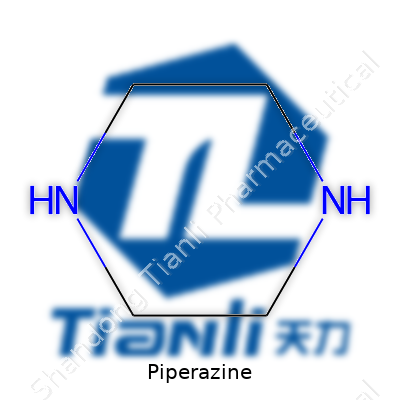
Piperazine draws attention on chemical shelves as a solid, almost odorless substance with a bitter taste. Companies offer it mainly as flakes or in granulated form. Its structure—a six-membered ring with alternating carbon and nitrogen atoms—supports a vast array of synthetic uses. Industries turn to it for preparing active pharmaceutical ingredients, for making corrosion inhibitors in water treatment, and for helping set up polymers for clothing and engineering plastics. This adaptability has placed it in a small group of bulk chemicals that cross back and forth between health, agriculture, and manufacturing without skipping a beat.
Physical & Chemical Properties
Piperazine stands out with its melting point around 106°C and boiling point close to 147°C under reduced pressure, but it sublimates instead of melting at atmospheric pressure. The solid dissolves easily in water, thanks to its two nitrogen atoms—those lone pairs easily attract protons, unleashing moderate basicity. The molecule holds up in most laboratory conditions. It can take the heat in synthesis reactors without decomposing, but it doesn’t play well with strong oxidizers. Its dimorphic crystalline forms sometimes turn up in discussions about pharmaceutical formulation, where even a small shift in solid form can matter for drug delivery.
Technical Specifications & Labeling
Piperazine arrives on-site with labels that demand attention. Purity matters for its buyers; high-purity grades claim 99% or higher for pharmaceutical and analytical use, while industrial applications may accept 98% with residual moisture under 0.2%. Labels list melting and boiling points, solubility, CAS number 110-85-0, and other identifiers such as EC or UN numbers for easy customs clearance and chemical inventory. For shipments, packaging must hold up against moisture, as hydrated forms risk caking in humid warehouses. Manufacturers often flag piperazine’s slight ammonia smell and make sure hazard phrasing about skin and eye irritation spells out the need for gloves and goggles.
Preparation Method
The most common laboratory route to piperazine involves reacting 1,2-dichloroethane with ammonia—a process that recalls basic organic chemistry lessons about nucleophilic substitution. Industrially, pressures and excess ammonia drive the formation of the six-membered ring, with purification carried out through distillation or crystallization. Spinning through old process engineering slides, I remember the mention of by-products like monoethanolamine and ethylenediamine that plant operators must capture or recycle. Waste streams have to meet environmental controls, so companies invest in closed-loop systems to minimize release of nitrogen compounds.
Chemical Reactions & Modifications
Piperazine enters synthetic plans as a handy nucleophile. Its nitrogen atoms react with acid chlorides, sulfonyl chlorides, and isocyanates, providing an anchor point for building drugs such as antihistamines and anti-psychotics. Medicinal chemistry campaigns frequently use substituted piperazines to tweak bioactivity in early-stage compounds. In polymer manufacturing, cross-linkers derived from piperazine control viscosity or boost temperature resistance. On my own workbench in grad school, we experimented with modifying piperazine to develop chelating agents—those ring structures proved their worth in pulling out heavy metals from water samples. The chemical’s reliability brings satisfaction to anyone looking for secondary amine reactivity without excessive fuss.
Synonyms & Product Names
Piperazine travels the globe under many names. Common synonyms include hexahydropyrazine, diethylenediamine, and pipazyl, though chemical catalogs usually stick with “piperazine” for clarity. Commercial products sometimes bear trade names linked to their applications, especially in pharmaceuticals or specialty polymers. In regulatory documents, piperazine’s digital ID—CAS 110-85-0—serves as the default to cut through language barriers. In my experience, project groups need to confirm the material’s identity before running reactions, since over-reliance on a trade name can lead to confusion, especially with so many derivatives sharing similar roots.
Safety & Operational Standards
Dealing with piperazine on the shop floor or in a teaching lab means following strict safety guidelines. Skin, eye, and respiratory exposure risks stand front and center in safety data sheets. The substance irritates mucous membranes, and long-term, repeated contact can affect liver or central nervous system function. Plant operators stay on the safe side by installing fume hoods and issuing personal protective equipment. Emergency showers and eyewash stations help manage accidents. Disposal follows local hazardous waste laws, with pH-neutralization and incineration as the usual final steps. Training sessions focus not just on avoiding spills, but also on decontaminating any area quickly, since piperazine residues can cause sneaky skin irritation.
Application Area
Piperazine spans a wide landscape of uses. Pharmaceutical companies first harnessed it for deworming medications, but then medicinal chemists began including it in drug cores for everything from antipsychotics to antidepressants. Water treatment programs benefit from its role as a corrosion inhibitor in cooling towers. In textiles and plastics, it shows up as a curing agent, giving finished products more resilience. I’ve run into piperazine when troubleshooting scale buildup in HVAC systems; maintenance teams value its capacity to stabilize water chemistry without creating toxic by-products. The compound even finds a role in gas sweetening processes for scrubbing acidic gases from industrial streams—proof that simple molecules can solve large-scale environmental problems.
Research & Development
Interest in piperazine hasn’t faded. Current research explores designing new derivatives for targeted pharmaceutical effects—antiviral activity, drug transport vectors, or improved receptor selectivity. Materials scientists test piperazine-based polymers for high-strength coatings and membranes in battery technology. Academics dig deeper into structure-activity relationships, often using computational models to predict how small changes in the ring change everything from toxicity to binding affinity. As a graduate researcher, synthesizing analogs with different substituents fueled hours at the fume hood, and the push for greener chemistry has emerged with milder reaction conditions and better atom efficiency for big-batch manufacturers.
Toxicity Research
Early toxicological screens pinpointed risks with high-dose, chronic piperazine exposure—shaking, dizziness, and sometimes allergic skin reactions in sensitive groups. Studies in lab animals confirm liver and kidney stress at overdose levels, reinforcing workplace safety protocols. Regulatory agencies, including the EPA and European Chemicals Agency, demand detailed hazard assessments before approving large-scale use. Medical literature describes mild to moderate neurological effects in rare cases after accidental ingestion. Safety professionals campaign for tight monitoring, especially where food or pharmaceuticals cross paths with the raw chemical. Research continues to model breakdown products in the environment and whether new derivatives present unexpected risks. For all of its uses, maintaining strict controls has become a shared goal among public health, industrial, and academic circles.
Future Prospects
Looking ahead, piperazine holds promise as a platform for specialty drugs, smart materials, and cleaner industrial processes. The growing demand for cost-effective, scalable precursors in green chemistry points to its adaptability. In water treatment and emissions control, companies evaluate piperazine’s carbon capture performance and options for recycling spent materials. Initiatives in pharmaceutical R&D explore hybrid molecules that combine piperazine rings with peptides or aromatics for next-generation therapies. Regulations around toxicity and environmental fate keep scientists searching for safer, more biodegradable alternatives. Regardless of shifting industrial trends, piperazine’s persistent value comes from its combination of chemical reliability, safety-mitigating practices, and ever-expanding application envelope.
From Old Dewormers to New Medicines
A lot of folks hear the word "piperazine" and think of something only a scientist would touch. In practice, it's a lot closer to the lives of regular people than many realize. Decades ago, doctors handed out piperazine salts to clear up worm infections. Kids with threadworms got piperazine prescribed by the spoonful, since it forced the worms to let go and flushed them out. When you’ve got more than a couple of children in a small home, you remember those little bottles—and the relief that came with the all-clear from the doctor.
Piperazine Shapes the Way Chemists Build New Drugs
Doctors do not lean on piperazine as a first-line treatment for worms these days, since more targeted drugs have been developed. Even so, chemists found a new job for this compound. Piperazine’s ring structure gives it a backbone that supports the development of other medicines. Scientists call it a "building block" because it holds other chemical groups together, and that flexibility allows for tweaking new drug formulas for everything from antihistamines to antipsychotics. The antidepressant trazodone, the antipsychotic quetiapine, and the antihistamine cetirizine—each uses piperazine as a key piece. Many mental health breakthroughs depend on scientists having access to this basic ring.
Industrial Uses Bring Value—and Risks
Beyond health care, piperazine also pops up in industrial sites. Workers handling oil and gas see piperazine being added to the equipment that strips carbon dioxide out of airflows. This process helps capture CO2 before it escapes, a small but important response in reducing greenhouse gas emissions from refineries and power plants. As good as that may sound for the environment, handling piperazine brings real safety concerns. The vapors can cause headaches and nausea, and long-term exposure needs solid protective gear and careful workplace monitoring. Manufacturing plants cannot ignore best practices for handling chemicals like this.
Public Health Questions and Environmental Impact
People often forget that any chemical used on a large scale leaves a footprint behind. Piperazine shows up in wastewater around drug manufacturing plants and also in the run-off from farms where old worming salts get washed into creeks. Water treatment plants can filter out a good chunk, but not always everything. Persistent chemicals raise questions: How much can build up in our water systems? Will fish and wildlife take a hit over time? The answers push authorities to keep improving water filtration and monitoring—all for the sake of community safety.
Looking for Smarter Solutions
As drug companies and energy producers lean on piperazine, researchers work to steer clear of risks that fall on families, workers, and nearby neighborhoods. Companies running wastewater treatment or chemical plants have to make improvements, not just for regulations but for their own reputation and community trust. Governments fund new research to develop medicines that don’t create stubborn byproducts, and more drugmakers look for alternatives when it’s possible.
Piperazine tells a story about the need for responsibility. It’s a tool—sometimes a lifesaver, sometimes a risk—and it reminds us all that handling chemicals, whether in medicine or industry, takes steady hands and regular oversight.
Understanding Piperazine
Piperazine pops up in more places than most people realize. In medicine, it’s shown up in treatments for intestinal worms. The chemical also works its way into the world of plastics and coolants. What catches folks off guard is its ongoing presence not only in industrial applications but in health discussions—and sometimes, in recreational settings where it definitely doesn’t belong.
How Piperazine Enters Human Use
My first real encounter with piperazine knowledge came during a community outreach about deworming in agriculture-heavy areas. There, stories traveled fast about the effects—the nausea, the muscle twitches, the way some kids didn’t feel right for a week. Piperazine in medicine gets approved use under close monitoring and clear dosing. Decades ago, it found its way into anti-parasitic tablets, but the margin for error quickly shrinks if folks stray from prescribed amounts.
Health Risks and Concerns
Science hasn’t left piperazine's risks a guessing game. Side effects stick out even at recommended doses. Some users experience headaches, drowsiness, and the unease that comes from dizziness. The tough stuff starts at higher intake: confusion, trouble with balance, muscle spasms, and, in rare cases, seizures. Children and people with kidney or liver problems face more risk. Doctors don’t take those warnings lightly—the reality is, the safety profile of piperazine shows clear rough edges.
Over time, researchers also picked up on the chemical's presence in "legal high" party drugs, often sold as a cheap, sketchy alternative to more infamous stimulants. That arena throws careful dosing out the window. Emergency room workers started seeing cases of anxiety, rapid heartbeat, and paranoid behavior after parties using piperazine-based products. This corner of the story highlights a big issue: just because a substance lands in medicine, it doesn't make it safe in uncontrolled hands.
Regulation and Oversight
Health authorities did not waste time clamping down once recreational use hit the news. Many countries shifted piperazine-based substances onto lists that put production and sale under strict watch or outright bans. As with many chemicals, medical oversight sets the line between therapeutic benefits and real danger. The FDA in the United States recognizes piperazine only inside strict conditions for deworming—hard stop for other uses.
Alternatives and Safer Choices
Modern medicine now tends to favor safer drugs for worm infections, like mebendazole or albendazole, both with fewer and milder side effects. In my own family, when the pediatrician faced a suspected worm case, the script listed one of those alternatives, not piperazine. The switch over the years shows a medical field that listens and adapts to reports from patients, doctors, and studies alike.
Building Safer Habits
Safety calls for respect and responsibility. Taking any chemical outside a doctor’s advice invites risks. For parents, patients, or partiers, the smart route runs through trusted healthcare sources, not speculation or shortcuts. Piperazine’s story adds up to one thing: using it without medical guidance steers straight into health hazards. Borrowing a friend's medicine, misusing veterinary tablets, or picking up street substances puts lives on the line.
Why People Take Piperazine
Piperazine has been around for decades, mainly used to treat intestinal worm infections. Many folks remember their parents giving it to them after a doctor prescribed it for pinworms. The compound interrupts worm nerve signals so they can’t move or reproduce. The popularity of this medication picked up over the years, especially where parasitic infections stay stubbornly common and clean water isn’t always a given. In my own family, a summer spent in the countryside meant it showed up in our medicine cabinet by the season’s end.
Common Side Effects Everyone Talks About
A lot of the talk around the kitchen table or in online forums centers around trouble in the digestive system. Nausea tends to be the number one gripe. Kids wrinkle their noses, and adults roll their eyes after dosing. Stomach cramps, vomiting, and diarrhea show up next in line—usually nothing dramatic, but enough to be uncomfortable. Sometimes people mention a weird metallic taste in the mouth right after swallowing the pill. Science backs up these complaints. Large-scale studies confirm these are the issues most folks experience, and nearly everyone feels better once the medication course ends.
Nervous System Surprises
One area where piperazine sometimes catches a person off guard is how it affects the nerves. Feeling a bit dizzy, even slightly confused, or walking less steadily pops up in discussions with older patients. On rare occasions, people describe muscle twitching, seeing things that aren’t there, or sudden outbursts of laughter they just can’t control. Some children have had seizures after taking high doses. Reliable research over the years points to these rare but real side effects, especially in kids and patients with kidney problems. Stories from nurses in pediatric clinics remind us not to take neurotoxicity lightly.
Allergic Reactions and Skin Problems
Some folks break out in hives or itchy rashes. Swelling around the lips or eyes means heading to the emergency room immediately. Though not common, these allergic reactions make doctors cautious about recommending piperazine to anyone with a history of allergies. Reports in medical journals say these symptoms show up in less than one percent of patients, but it’s a risk nobody wants to ignore. In my time volunteering at rural health camps, we kept an eye on every child and had antihistamines ready, just in case.
What Happens with Long-Term or Repeated Use
Piperazine isn’t usually a daily medicine; most folks get it for a short period. Problems arise among people who take it repeatedly, especially without much gap in between. Kidney and liver stress show up in blood tests. People with chronic kidney disease have ended up hospitalized after using more than the recommended dose. Experts at the World Health Organization have warned for years that unsupervised use in communities can make these side effects much worse. Personal stories from mobile health clinics show the temptation to skip the doctor and use a leftover dose at home, but the risks stack up fast that way.
Looking at Safer Choices and Preventing Problems
No one likes feeling sick from medicine meant to make them better. Health authorities keep pushing for alternatives with a stronger safety track record, like mebendazole or albendazole. They also keep a close eye on how piperazine is used, warning against giving it to pregnant women or anyone with epilepsy. Education matters most here—parents, teachers, and pharmacists all share the job of explaining why dosing and follow-up make such a difference. My experience says staying informed—about what works, what doesn’t, and what can go wrong—spares a lot of trouble down the road.
Simple Steps to Better Experiences
Doctors recommend starting with the lowest effective dose. Clear communication about side effects during prescription hand-offs makes a real difference. Reporting odd symptoms early—and not waiting for things to get worse—protects everyone. Communities that blend strong science with practical advice end up healthier and safer, long after the last worm is gone.
Piperazine caught my attention long before I ever considered writing about medicine. Conversations around it usually surfaced after stories about pinworms at school. Parents swapped tales about how their kids handled the medicine. Cue the most common question from every parent—how should Piperazine be given to kids safely?
Why Dosing Matters: Real Experiences from the Ground
Doctors and pharmacists don’t recommend specific instructions just for fun. From my family’s experience, and from plenty of people I’ve talked to, skipping instructions turns basic medication into a guessing game. Piperazine, which comes as both syrup and tablets, works best by mouth—swallowing with water or blending the syrup into juice for kids who gag at the taste. The routine feels straightforward, but a good chunk of people still wing it, especially when they buy over the counter.
Here’s a fact worth repeating: health experts suggest taking Piperazine after food. This keeps nausea at bay and lands the medicine where it counts. Skipping meals to rush the dose means more upset bellies—nobody, especially not parents, wants that in the middle of the night.
Stick to the Script: Avoiding Amateur Hour
I’ve seen people give the wrong amount to their kids. Sometimes it’s out of fear or hope that more medicine clears out worms faster. The reality looks very different. Overdosing doesn’t improve results. It brings on muscle twitches, dizziness, or headaches. Kids become jumpy or withdrawn, and suddenly nobody trusts the medicine anymore. Genuine dosing comes down to age and weight—young children need smaller doses, teens get more, and adults follow the higher end of the chart. It pays to check the chart every time, just as you’d double-check a new recipe before serving guests.
Doctors and pharmacists aren’t just throwing numbers around for fun; these professionals look at kidney and liver function, patient size, and possible allergies or drug interactions. My neighbor learned the hard way after her son had a mild reaction—turns out, he’d just finished an antibiotic that clashed with Piperazine. Reliable advice saved her a rushed hospital visit.
Completing the Course: Not Just a Day’s Work
A common mistake people make with Piperazine? Stopping after a single dose. The worms lay eggs, and one shot doesn’t always knock out the next round. Standard guidance says to treat, wait a couple weeks, and treat again. That two-step routine keeps reinfections from bouncing families back to the pharmacy every month. I’ve watched endless cycles in my community disappear once parents understood this part. It works.
New Approaches Won’t Replace the Old Basics
Some clinics try reminder apps or marked dose cups, others hand out fridge magnets with simple instructions. These nudges help, but nothing outclasses a one-on-one explanation. That five-minute talk with a pharmacist—running through timing, meal tips, and what to watch for—company a family remembers much longer than paperwork ever does. It shouldn’t surprise anyone that Google’s health quality standards talk about real-life, expert guidance as a must-have. Trust grows out of those small, local touches, especially with something that feels as routine as deworming medications.
Kids stay worm-free, parents worry less, and community health gets a boost. Nothing replaces careful attention for something as simple but vital as giving Piperazine.
Understanding Piperazine Beyond the Label
Anyone who grew up with a pet has likely heard of piperazine. It’s an old-school dewormer, picked up off the pharmacy shelves for fighting roundworms in both animals and people. Over the years, doctors stuck to tried-and-true medications like piperazine to treat pinworm and roundworm infections. It sounds simple enough, but nothing in pharmacy ever stays simple. Even a medicine that’s been around for decades can clash with other treatments or health conditions.
The Real Risks of Mixing Piperazine With Other Drugs
No one walks out of a pharmacy planning to mix up risky drug combos, but real life piles on more prescriptions as people age or get diagnosed with new issues. Add antibiotics, antipsychotics, or anti-seizure drugs to the mix, and sudden surprises may show up. Piperazine affects nerve signals—the same pathway a lot of other important medications travel. That overlap sets up the chance of unexpected reactions, sometimes mild, sometimes dangerous.
Seizure risk always catches the attention of pharmacists. In my experience, patients with a history of epilepsy or anyone who’s on medication for mood or mental health concerns need extra care with piperazine. Pairing it with medicines like chlorpromazine or tricyclic antidepressants can push the nervous system over the edge and make seizures more likely.
Drug Metabolism Complications
Piperazine travels out of the body through the kidneys, leaning on renal function to play its part. People on nephrotoxic drugs (that might harm the kidneys) or those with poor kidney health themselves could build up higher piperazine levels than expected. Every pharmacist knows patients with chronic conditions tend to have a longer medication list. Diuretics, some painkillers, even common antibiotics can complicate how piperazine gets cleared out.
Common Medications and Hidden Threats
Even simple over-the-counter remedies can sneak up on someone. People don’t always see the issue if their morning cold medicine or nightly pain reliever sits on a different pharmacy shelf. Think of drugs containing antihistamines or any product that also messes with how signals travel in the body. Drinking alcohol or using recreational drugs adds its own unpredictable layer.
Antihistamines, Allergy Season, and Piperazine
A quick glance at spring allergy medicines shows how often people double up without thinking. Antihistamines and piperazine both press on the nervous system, so mixing the two might amp up possible side effects—drowsiness, lack of coordination, anxiousness.
Talking Openly With Your Health Care Team
Every patient story sounds different, but all share the need for honest conversations at the pharmacy counter. Most problems with piperazine and other drugs get sorted out before they cause harm, once patients share the whole list of what they’re taking, down to the herbal teas or supplements. Pharmacist experience tells me a lot of complications pop up when busy people forget to mention an old prescription or skip over a bottle picked up on a trip.
Moving Toward Safer Choices
Health professionals stay ahead by using the latest facts on how drugs like piperazine interact with others. Online databases such as Drugs.com and Lexicomp get checked not once, but every time a new medicine joins the review list. Family doctors and pharmacists rely on this collective knowledge to adjust doses or bump a prescription for something safer if they spot a red flag. Patients play the biggest role by sharing as much about their health and medication habits as possible, letting that open flow of information keep everyone safer.