Potassium Sulfate: Past, Present, and a Glimpse Ahead
Historical Development
Folks have turned to potassium sulfate for centuries to tackle agricultural challenges. European chemists started making it around the 18th century and it quickly became valuable beyond simple mineral collecting. Originally, raw deposits were lab curiosities, but eventually industrial thinkers explored greater agricultural possibilities. Early production could hardly meet farming needs until improvements in sulfur and potash mining kicked in. Today’s modern output stands on a heap of research and practical experience, passed down from those first experiments and field trials.
Product Overview
Potassium sulfate, or sulfate of potash, appears mostly as a non-flammable, white crystalline powder. It dissolves well in water, making it practical for both irrigation systems and dry spreading. Farmers have come to rely on it, especially if their crops cannot tolerate extra chloride. Grocery shelves full of fruit and veggies trace their origins back to fields nourished by this compound.
Physical & Chemical Properties
This mineral looks like white or sometimes slightly off-white powder or granules. Chemically, it’s K₂SO₄, and you’ll see it rated at about 52% potassium oxide (K₂O) and roughly 18% sulfur by mass. It melts at 1,069°C, so you aren’t likely to see it change form on the farm, but that high stability makes it easy to store and handle. Its strong ionic bonds allow it to act as a reliable potassium provider. In water, it breaks apart easily, letting plants access potassium without much delay.
Technical Specifications & Labeling
Packaging carries vital data: purity levels, insoluble matter, moisture, and nutrient content all listed. Regulators ask for accurate weights and clear safety notices. Labels on bags mention the percentage of potassium and sulfur—real numbers for those who need results, not marketing lingo. Bulk shipments for broad-acre farms or smaller packets for gardens bear similar details, keeping users informed no matter their scale.
Preparation Method
Commercial potassium sulfate grows from a blend of mineral processing and chemical reactions. The Mannheim process remains popular, reacting potassium chloride with sulfuric acid at high temperatures to release hydrogen chloride gas and form potassium sulfate. Some outfits also exploit natural minerals like kainite or schoenite, mining and washing them to collect potassium-rich output. These methods offer different trade-offs in energy consumption, cost, and yield.
Chemical Reactions & Modifications
Chemists have mapped out several pathways for modifying potassium sulfate’s behavior. They see it react with strong acids, bases, and some transition metal salts; such tweaks can change nutrient release rates or improve interaction with other soil amendments. In rare instances, complexing agents or coatings improve flow properties in mechanical spreaders or cut down on caking in humid sheds.
Synonyms & Product Names
On store shelves or lab benches, this compound answers to many names: sulfate of potash, arcanite, SOP, or just plain K₂SO₄. Agricultural suppliers sometimes sell blends or slow-release versions under proprietary brand labels. Those lists of names mean one thing: folks across trades and languages trust this substance to put potassium where it needs to go.
Safety & Operational Standards
No one should ignore safety. While not volatile or particularly toxic in usual applications, inhaling the dust or handling it carelessly can irritate skin or airways. Regulatory bodies set case-specific exposure limits and ask users to glove up, avoid open-toed shoes, and store the product dry. Emergency data sheets point out the right fire extinguishers and cleanup steps should large spills occur or warehouses catch fire.
Application Area
Farms and greenhouses lead use, with the fertilizer playing a vital role in raising fruits, vegetables, and leafy crops sensitive to chloride. Its role doesn’t stop there—manufacturers use potassium sulfate in some glass, ceramics, and textile work, leaning on its high melting point and chemical stability. I’ve seen hydroponics operations depend on its clean profile to keep nutrient tanks free of impurities and salt stress.
Research & Development
Research labs worldwide keep tinkering with potassium sulfate, finding ways to make it from industrial byproducts or from brines that mining once ignored. Teams also study how fine-tuning granule size or adding micronutrient coatings can boost fertilizer efficiency and crop nutrition. Ongoing trials measure runoff impacts, soil health after repeat use, and plant response in different climates.
Toxicity Research
Most toxicity studies agree: potassium sulfate poses low risks, provided it stays within agricultural doses. The main worries arise if animals or people ingest large amounts, which can upset stomachs and disrupt potassium-sodium balance. Long-term soil tests look at whether too much builds up sulfur, but so far, field results suggest it works safely if growers watch their rates. Worker exposure studies keep a watchful eye for dust-related lung problems but show manageable risk when common sense and basic gear get used.
Future Prospects
Potassium sulfate’s future holds promise, especially as food production ramps up and farmers search for sustainable nutrient solutions. Climate change, regulatory demands, and new farming styles push industry and researchers to rethink how this compound fits into plant feeding programs. There’s potential in recovering potassium from unconventional sources—industrial wastewater, salt lakes, or recycled biomass. Smarter formulations coming off the lab bench stand to lower environmental burden and boost yields. With a focus on balanced plant nutrition and efficient resource use, potassium sulfate looks set to keep soil and growers moving forward.
The Role of Potassium Sulfate on the Farm
Anyone who's worked a patch of soil knows plants aren’t picky eaters, but they do have cravings. Take potassium sulfate. This compound, often called sulfate of potash, gives crops something they need to stay healthy – potassium. Walk into a farm co-op or browse online, and you’ll spot big bags marked “SOP,” filled with white crystals. For fruit trees, lettuce fields, or even the roses along the driveway, potassium sulfate feeds roots and leaves with one of nature’s basic building blocks.
Unlike many potassium fertilizers, SOP skips the chloride. Plants balk at chloride-heavy soil, especially grapes, berries, and tobacco. Sensitive crops wilt under too much chloride, and yields shrink. Potassium sulfate steps up because it’s gentle and doesn’t burn roots. Growers who’ve battled yellowing leaves know how a sprinkle of SOP can green things up fast. That’s because potassium pushes along water movement in cells, helps sugar travel from leaf to fruit, and keeps stems upright and unbroken, even after a storm.
Not Just for Food—Industrial Uses Matter Too
It’s easy to focus on farmland and forget other uses. Glassmakers value potassium sulfate because it prevents defects in crystal and technical glass. The fertilizer aisle doesn't mention this, but potash turns up in the kilns that shape everyday windows, chemical lab gear, and even digital screens. Paper mills sometimes use potassium sulfate in specialized treatments, aiming for a smoother sheet or the right brightness. The chemical world likes potassium sulfate because it introduces potassium without dragging in unwanted byproducts.
People handling dyes and pigments have found that potassium sulfate can help with the production process. Textile workers trust it to aid certain reactions. So it’s more than just a farm friend.
Boosting Yields Without Harming the Ground
Most folks who use potassium sulfate pick it up for what it does above ground: bigger tomatoes, sweeter fruit, higher-quality tubers and grains. But long-term health of the soil always lingers in the mind. Farmers learn young that healthy fields grow healthier food. Some fertilizers bring salt and trace metals that linger and pile up year after year. Potassium sulfate dodges much of that trouble. It dissolves clean, washes through without laying down heavy burdens, and doesn’t turn soil toxic.
Agronomists keep tabs on the balance between nutrients in the ground. Potassium sulfate gives a two-for-one: potassium plus sulfur. Both end up on the crop’s ingredient list, especially for wheat and corn. Corn soaks up sulfur in the early stages, and wheat gets stunted without it. Applying potassium sulfate means fields get both nutrients, cutting down the number of separate products and passes with the tractor.
Challenges and Opportunities for Improvement
That said, potassium sulfate isn’t cheap. Mining it or manufacturing it draws energy, and the raw material only comes from select spots on the map. This can mean higher prices during supply bumps, especially in drought years or when shipping costs spike. People in agriculture and industry have started looking for better extraction methods and recycling options, hoping to stretch supplies further.
For those out in the fields or working in plants, potassium sulfate’s story comes down to results. Greener leaves, tougher stems, stronger fruit. Balanced soils. Clean runoff into streams and lakes. Getting all these benefits without extra baggage makes potassium sulfate a stand-out, whether you’re tilling the land or running a factory line.
Digging Into Potassium Sulfate
Potassium sulfate pops up on fertilizer bags all over the world, usually with its chemical shorthand, SOP. It feeds two things plants crave: potassium and sulfur. I’ve watched gardeners and farmers pour it onto their fields, hoping for robust harvests. But is it always a good idea? I’ve spent years working with fruit trees and kitchen gardens, and these questions come up every season.
What’s Good About It
Most plants need potassium to move water, make strong stems, and fruit reliably. Potassium sulfate brings those nutrients without dumping extra salt like some other fertilizers can. That low salt effect matters. On my family’s property, we learned the hard way—salt-heavy options burn roots and shrink yields, especially with thirsty crops like strawberries or tomatoes.
Potassium sulfate also brings a little sulfur. Not all soils have enough. Poor soils, or spots that got hammered by too much rain, often turn up low on sulfur. Plants start to look pale and grow slowly there. Putting down a little potassium sulfate often clears those problems up, and research backs up how important it is: a 2016 study showed potassium sulfate helped wheat and barley stand tall and green.
What Needs Attention
Problems start with overuse. Some think more fertilizer means better plants, but I’ve seen what happens when potassium piles up—leaves with yellow spots, younger roots stunted. The soil itself can shift, too. Too much potassium locks out other nutrients like magnesium and calcium. I once saw a whole patch of cucumbers lose their edge because of repeated potassium sulfate top-ups; calcium levels sank, and every fruit turned watery and bland.
Not every region grows the same way. In my region, heavy clay soils hang onto potassium a long time; sandy fields lose it fast. A one-size-fits-all approach doesn’t work. Soil tests really help here. The experts at local ag extensions often suggest them for a reason: they reveal exactly what’s missing and what isn’t.
Thinking About Long-Term Soil Health
Going all out with synthetic fertilizers, no matter which type, whittles down the soil’s natural balance. I’ve watched neighbors watch earthworms vanish. Without enough organic matter, soil won’t drain well and plant health falters. Crops might still sprout, but the long-term view turns bleak. Potassium sulfate alone won’t fix a struggling patch; it works best as one tool in a bigger kit.
I’ve found success mixing organic matter like compost into any plan that uses potassium sulfate. Compost buffers harsh effects, helps with nutrient exchange, and keeps the living side of the soil thriving. Crop rotation helps too. This breaks up pest cycles and gives soil time to recharge.
Smart Use Makes a Difference
Potassium sulfate works well for plants that hate excess chloride, such as grapevines and potatoes. It acts as a lifesaver in areas with water shortages since its salt load won’t stress dry soils further. Still, it isn’t a magic dust—thoughtful application goes a long way. Rely on soil tests, rotate crops, and balance with organic matter. Real results come from watching the land, not just following bag directions.
Understanding Potassium Sulfate
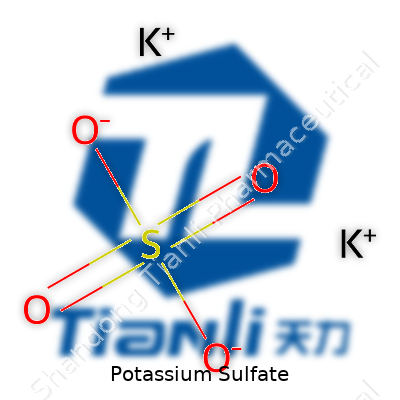
Potassium sulfate comes up in lots of garden conversations, especially where crops need specific nutrients. Its formula—K2SO4—might look like a secret code, but it tells a bigger story about why farmers trust this compound and how chemistry backs up our food systems. You see two potassium atoms, a sulfur atom, and four oxygen atoms holding it all together. That’s enough to spark curiosity about its reliability and how it does its job.
Roots, Soil, and Essential Nutrients
Dirt isn’t just dirt. Roots seek what’s needed to grow strong: potassium is one of those must-haves. Plants pull potassium out of soil to keep their water metabolism in line and boost resistance when the weather fights back. While the world has other potassium choices—like potassium chloride—plenty of soils and crops just can’t handle added chlorine. That’s where potassium sulfate steps into the sunlight. Common in orchards, vineyards, and fields dedicated to prized crops, K2SO4 delivers potassium without the baggage of chloride. Less salt stress on roots means happier, tougher plants, leading to better quality food reaching the kitchen.
Gardeners often mix in potassium sulfate where soil tests call for it, especially in sandy soils that lose nutrients fast. My own tomato beds in the spring always respond well to just a small handful, and the results show up in thicker stems and more fruit. For anyone who’s tried to coax fruit from tired soil, seeing a product work right before your eyes is the best kind of proof.
From Factories to Fields – How Chemistry Shapes Agriculture
K2SO4 doesn’t appear by magic. A big chunk comes from mining minerals like langbeinite or through chemical reactions involving potassium chloride and sulfuric acid. This sourcing means farmers and gardeners can access fertilizer made with predictable composition, cutting back on uncertainties. According to the Food and Agriculture Organization, potassium ranks high as a nutrient deficit in many farmland regions, affecting grain and fruit production around the world. Supplying the right formula matters: too much or too little changes crop yield and quality.
Water solubility counts as one of its highlights. That means you can water it in, blend it into drip systems, or spread it for slow-release. Without a large environmental footprint, potassium sulfate fits organic and conventional farm practices, provided folks follow safe rates and application methods. Some studies warn against overuse, but thoughtful application protects both the crop and the soil’s future prospects.
Solutions and Smarter Use
Matching the soil’s needs to the right fertilizer takes more than just reading a bag. Frequent soil testing and regional advice help reduce unnecessary expenses and protect waterways from nutrient runoff. Extension offices and agriculture experts stress the value of monitoring both potassium and sulfur levels. For growers on a budget, researching cooperative buying or joining local grower networks opens up better deals and shared experience.
Potassium sulfate’s formula, K2SO4, doesn’t just belong in a chemistry textbook. Its balanced nutrient punch keeps crops thriving and growers confident that science works along with nature. With careful use and respect for the ground beneath our feet, it transforms from a handful of dry granules into food on the table.
Why Potassium Matters in the Field
Plenty of us who have spent any time around crops or gardens know the difference strong, upright plants can make. Potassium plays a huge role in that. Crops take up more potassium than any other nutrient apart from nitrogen. I’ve seen first-hand how tomatoes and potatoes suffer without it: poor color, weak growth, and sometimes even dropped yields. Potassium keeps water moving through plant cells and helps build disease resistance. If someone farms on sandy soils or in a place with heavy rainfall, those minerals don’t stay put for long, and plants start drawing the life out of tired earth.
Potassium Sulfate—Why Folks Use It
Potassium comes in different forms, but potassium sulfate (K2SO4) drops two essential benefits. It offers potassium plus a solid dose of sulfur, which plenty of soils can run short of—especially with today’s cleaner air and less atmospheric sulfur. Compared to potassium chloride, potassium sulfate doesn’t risk burning the salt-sensitive crops. I’ve seen everything from berries and beans to onions doing better with potassium sulfate, since they don’t take to high-chloride fertilizers.
How to Apply Potassium Sulfate without Wasting Money
Application starts with looking at the soil. Soil testing is worth every penny. Skipping it leads to guesswork and often over-application. Work with a reliable lab to know your soil’s real needs. If tests show a potassium shortage, side-dress the fertilizer near plant roots or mix it right into the ground before planting. Simple broadcast spreading gets popular, but I’ve noticed banding just below or beside seed rows really pushes up early growth, especially in corn and vegetables.
Potassium sulfate works well both for pre-plant and for supplementary feeding during active growth. Dissolving it for drip irrigation helps keep things even, especially in commercial produce fields. In dry climates, surface application brings less reward unless it’s followed by a good soaking—potassium struggles to slip far into dry soil without water helping out.
What to Watch For: Crop Type and Timing
Not every farm needs potassium sulfate every single year. Potatoes, carrots, grapes, and leafy greens respond strongly, especially in lighter soils. Heavy clay fields often hang onto potassium longer, so piling on more rarely helps. Sulfur, though, gets leached right out in humid climates, which makes potassium sulfate double-useful there. Always read the label for rates, and don’t try to guess by eye—too much potassium starves plants of other nutrients, and roots can struggle if fertilizer sits too close.
Poor spreading or imbalanced use burns money and sometimes burns crops. Machines that spread fertilizer plus careful calibration help make sure the job’s done right. Walk the rows or dig a shovel in—look for roots spreading strong and leaves holding color, not burnt tips or stunted shoots.
Fertilizer Should Fit the Field, Not the Other Way Around
I’ve seen farmers save cash and headaches by treating fertilizer like any other tool. Try small strips before blanketing a whole field. Talk with local experts and keep track of results year to year. Weather, crop type, irrigation, and even the day’s workload play into the best way to apply potassium sulfate and see its benefits. Plants and soil always give an answer, if you’re ready to look and listen.
Looking Past the Label
Ask any grower who’s dabbled in organic methods, and you’ll hear about the careful juggling act between soil health, plant needs, and the strict rules that go along with certified organic labels. Potassium sulfate, a salt made by combining potassium and sulfur, makes its way into crop nutrition talks because it feeds plants two essentials: potassium and sulfur. Both stand out, especially in fruit and vegetable production, for boosting yields, flavor, and resilience against stress. But convenient nutrition doesn’t always match up with what organic growing circles want.
What Makes a Fertilizer ‘Organic’?
No farm supply store tag can give an instant answer. People look to the National Organic Program (NOP) and the Organic Materials Review Institute (OMRI) for guidance. Certification bodies care less about the substance’s chemistry and more about how it’s made. If potassium sulfate gets mined or extracted through simple processes that steer clear of synthetic chemicals, it sometimes makes the cut. Factories that pump out potassium sulfate using harsh chemicals or high-energy industrial reactions usually find their final product banned from organic use.
Farmer Experience and Soil Impacts
Working the land myself, I've seen the hunger many crops have for potassium, especially in sandy soils that won’t hold on to nutrients. Potassium deficiency leaves plants weak and fruit undersized. Sulfur helps with plant growth too—without enough, color fades and protein production slips. Potassium sulfate offers both without adding chloride, which can harm salt-sensitive plants. Still, turning to it just because it’s a quick fix can chip away at the heart of organic practices, which focus on building soil life and fertility for the long haul. Compost, cover crops, and manure all add potassium, and they come with loads of organic matter that feed the underground world, not just crops.
Regulatory Wrinkles
Organic rules don’t always come through clear as day. In the U.S., potassium sulfate lands on the National List of Allowed and Prohibited Substances but only if the manufacture process doesn’t use synthetic chemicals like acid-washing. Some OMRI-listed brands offer mined products, but every year, rules may shift or certifiers update their guidance. In the European Union, standards often run even tighter. That means every grower chasing certification better read the fine print and talk to their certifier instead of trusting the bag’s claims.
Staying True to Organic Values
Organic systems thrive on building up soil rather than just replacing what plants use up. Fertilizers like potassium sulfate work best as a backstop, not a crutch. Soil tests tell you what’s missing before tossing any amendments out of habit. Crops drawing heavily on potassium, like potatoes and tomatoes, sometimes call for an extra boost. Still, nothing replaces healthy, humus-rich earth.
Better Ways Forward
Thinking long-term means using cover crops like clover or vetch, mulching with plant residues, and composting green waste. These approaches slowly add not just potassium but other key nutrients, keep soil alive, and soften the ups and downs of farming. For those reaching for potassium sulfate, sourcing a naturally mined and OMRI-approved product, double-checking with certifiers, and using it as a supplement instead of a staple keeps organic production on the right path.
Weighing the Trade-Offs
Potassium sulfate can play a supporting role, especially in soils running low on potassium and sulfur. But leaning too hard on any packaged fertilizer makes it easy to overlook what drew so many of us to organic growing: respect for the land, attention to the big picture, and care for soil life. The real work comes from combining practical needs with a focus on the future, one season at a time.